14th August
1st November
Breast cancer is the most common cancer in the UK, with around 59,000 new cases diagnosed in women and about 420 in men each year. 81% of those diagnosed will undergo surgery as a fundamental part of their treatment, 36% will undergo chemotherapy, 62% will have radiotherapy and approx 80% will be advised to take hormone therapy for a significant number of years. Treatment can have lasting effects on the body, even years after it has finished. From scar tightness and cording to reduced shoulder mobility and changes in tissue sensitivity, recovery can involve much more than simply waiting for a surgical wound to heal.
At Podium Therapies in Rhiwbina, Cardiff, we offer both specialist physiotherapy and scar therapy massage to help people manage some of these physical changes and improve their comfort and movement.
But what exactly happens to the tissues following breast cancer treatment, and how can rehabilitation help?
How Does Breast Cancer Treatment Affect the Body?
Surgery, radiotherapy and other cancer treatments can cause changes to the skin, connective tissues, muscles and surrounding structures.
Following a lumpectomy, mastectomy, lymph node surgery or breast reconstruction, the body produces scar tissue as part of its natural healing process.
Scar tissue is made primarily from collagen, which helps repair damaged tissues. However, the arrangement and properties of this collagen can differ from those of the original tissue. As a result, some scars may feel firmer, less flexible or more sensitive than the surrounding skin.
Radiotherapy can also affect the tissues, sometimes contributing to longer-term stiffness and fibrosis.
These changes may result in:
Tightness or pulling around surgical scars
Reduced shoulder and arm mobility
Cording (Axillary Web Syndrome)
Changes in skin sensitivity or sensation
Chest wall stiffness
Discomfort during stretching or exercise
Difficulty reaching overhead or behind the back
Not everyone experiences these symptoms, and their severity varies considerably.
Importantly, physical symptoms can sometimes persist or develop months or years after treatment.
Understanding Cording (Axillary Web Syndrome)
Cording, also known as Axillary Web Syndrome (AWS), is a recognised complication following breast cancer surgery, particularly procedures involving the lymph nodes.
It often presents as tight, cord-like structures beneath the skin, usually extending from the armpit down the inner arm. In some cases, it may extend towards the elbow, wrist or chest wall and abdomen.
Cording can cause pulling sensations, pain and restricted shoulder movement, particularly when lifting the arm overhead.
Can Physiotherapy Help Cording?
Physiotherapy is commonly used to manage the symptoms and movement restrictions associated with cording.
Treatment may involve gentle stretching, progressive shoulder exercises, soft tissue techniques and an individualised rehabilitation programme.
A 2023 systematic review and meta-analysis examining physiotherapy for Axillary Web Syndrome found evidence supporting exercise and stretching for improving movement and reducing symptoms, although the quality and size of the available studies varied.
Manual therapy may also be helpful as part of a broader rehabilitation programme, but further high-quality research is needed to establish its specific effects.
Radiotherapy Burns, Fibrosis and Tissue Changes
Radiotherapy is an important treatment for many people diagnosed with breast cancer, but it can also affect healthy tissues within the treatment area.
During radiotherapy, some people experience a skin reaction known as radiation dermatitis, which may include redness, dryness, tenderness, peeling or, in more severe cases, blistering and broken skin. These reactions are sometimes referred to as radiotherapy burns. Active radiotherapy burns, broken skin or inflamed areas requireappropriate medical skin care and guidance from the oncology or radiotherapy team.
Once the skin has fully healed, however, some people experience longer-term tissue changes
One such change is radiation-induced fibrosis, where the tissues become firmer and less flexible due to changes in connective tissue and collagen production.
Fibrosis may contribute to:
Tightness across the chest wall
Reduced flexibility of the skin and underlying tissues
Shoulder stiffness
Discomfort during movement
Changes in posture or movement patterns
Can Physiotherapy and Scar Therapy Help?
There is currently limited high-quality evidence that massage can reverse radiation-induced fibrosis. Treatment therefore focuses on achievable goals, such as improving comfort, maintainingflexibility and supporting everyday function.
Physiotherapy can help address the functional effects of these changes through stretching, mobility exercises, strengthening and rehabilitation.
Where tissues have fully healed, gentle scar therapy massage may also be considered to help manage local discomfort, sensitivity and tissue restriction.
Shoulder Mobility and Flexibility Following Breast Cancer Surgery
Restricted shoulder movement is a common concern following breast cancer treatment.
Surgical discomfort, scar restrictions, cording, muscle weakness and protective movement patterns can all contribute to reduced mobility.
For some people, this may affect relatively simple activities, such as fastening a bra, reaching into a cupboard, putting on a coat or returning to swimming and exercise.
When movement becomes uncomfortable, it's understandable to avoid using the affected arm. However, prolonged avoidance may contribute to further stiffness and reduced strength.
What Does the Clinical Evidence Say?
Research supports the role of structured exercise and physiotherapy in improving shoulder movement and physical function following breast cancer treatment.
The National Institute for Health and Care Excellence (NICE) recommends physiotherapy assessment and treatment for people experiencing persistent arm or shoulder mobility difficulties following breast cancer surgery or radiotherapy.
Physiotherapy may involve:
Shoulder range-of-motion exercises
Gentle stretching and mobility work
Progressive strengthening
Postural and movement rehabilitation
Functional exercises tailored to everyday activities
Advice on safely returning to exercise
Treatment should be adapted to the person's surgery, healing stage, medical history and current symptoms.
What Is the Restore Scar Therapy Method?
At Podium Therapies, Sheree and Tor provide specialist scar therapy massage using the Restore Scar Therapy Method.
This approach uses gentle, hands-on techniques to work with fully healed scars and their surrounding tissues.
Unlike traditional deep tissue massage, Restore Scar Therapy focuses on light-touch techniques and individualised treatment, taking into account the scar's age, location, sensitivity and healing history.
Scar therapy may be used following mastectomy, lumpectomy, reconstruction and other surgical procedures, provided the area has healed sufficiently and there are no contraindications.
What Can Scar Therapy Massage Help With?
The potential benefits of scar therapy include:
Scar mobility: Gentle techniques may help improve how the skin and surrounding tissues move relative to one another, particularly where tightness is contributing to discomfort.
Sensitivity: Some scars become unusually sensitive, tender or uncomfortable to touch. Appropriate sensory rehabilitation and gentle treatment may help people gradually tolerate touch more comfortably.
Tightness and pulling sensations: Treatment may help manage local feelings of restriction, particularly when combined with movement exercises.
Body awareness and confidence: For some people, hands-on treatment can provide an opportunity to become more comfortable with an area of the body that has undergone significant physical change.
What Does the Research Say About Scar Massage?
Research into manual scar therapy suggests potential benefits for symptoms such as pain, pliability and sensitivity in some scar populations.
However, the evidence varies depending on the type of scar, treatment technique and outcome being measured.
There is currently limited research specifically evaluating the Restore Scar Therapy Method for breast cancer surgical scars.
It is therefore more accurate to describe scar therapy as a potentially helpful part of rehabilitation rather than a proven way to remove adhesions, reverse fibrosis or permanently remodel scar tissue.
Can Scar Therapy and Physiotherapy Help Years After Cancer?
One of the most common misconceptions about rehabilitation is that treatment must take place shortly after surgery to be worthwhile.
While early rehabilitation is important, physical difficulties can remain long after the initial recovery period.
Some people continue to experience scar tightness, altered sensation or restricted shoulder movement five, ten or even twenty years after breast cancer treatment.
Although mature scars are different from newly healed scars, older scars and the surrounding tissues can still be assessed for mobility, sensitivity and discomfort.
Physiotherapy may also improve strength, flexibility and movement patterns regardless of how long ago surgery took place.
There is less evidence about the effectiveness of manual scar therapy specifically for very old breast cancer scars, and improvements will vary between individuals. However, the age of a scar alone does not mean that further assessment or rehabilitation is pointless. For someone who has lived with restricted movement or discomfort for years, understanding the cause of those symptoms can be an important first step.
When Should You Seek Advice?
If you experience ongoing tightness, pain, restricted shoulder movement, cording or scar-related discomfort following breast cancer treatment, a physiotherapy or scar therapy assessment may help determine whether rehabilitation is appropriate. Physiotherapy assessment and exercise advice can also help with on-going cancer-related fatigue, lymphoedema, chemotherapy-induced peripheral neuropathy, functional activities, bone health, anxiety and sleep.
However, new or unexplained swelling, persistent worsening pain, changes to the breast or chest wall, new lumps, or wounds that are not healing should be assessed by your GP or oncology team before hands-on treatment.
Anyone at risk of breast cancer-related lymphoedema should also receive appropriate NHS advice from their local Health Board Lymphoedema Team, particularly if swelling or heaviness develops in the arm, breast or chest. Private physiotherapy and massage therapy can then be used to complement and support NHS treatment once an appropriate treatment plan has been established.
Supporting Recovery Beyond Cancer Treatment
Breast cancer recovery is different for everyone.
Some people regain comfortable movement relatively quickly, while others experience physical changes that remain long after their medical treatment has finished.
Physiotherapy and scar therapy cannot erase surgery or undo every effect of radiotherapy, but they may help address specific symptoms and support better movement, comfort and function. Supporting a return to exercise is also an important role of physiotherapy. Research demonstrates strong evidence that other symptoms such as cancer-related fatigue, lymphoedema, quality of life, physical function, anxiety and depression have all been shown to improve with specific exercise prescription, whilst there's also moderate evidence to support bone health and sleep with exercise. Reflexology, as a complementary therapy, can also help clients manage pain and fatigue levels, nausea and anxiety.
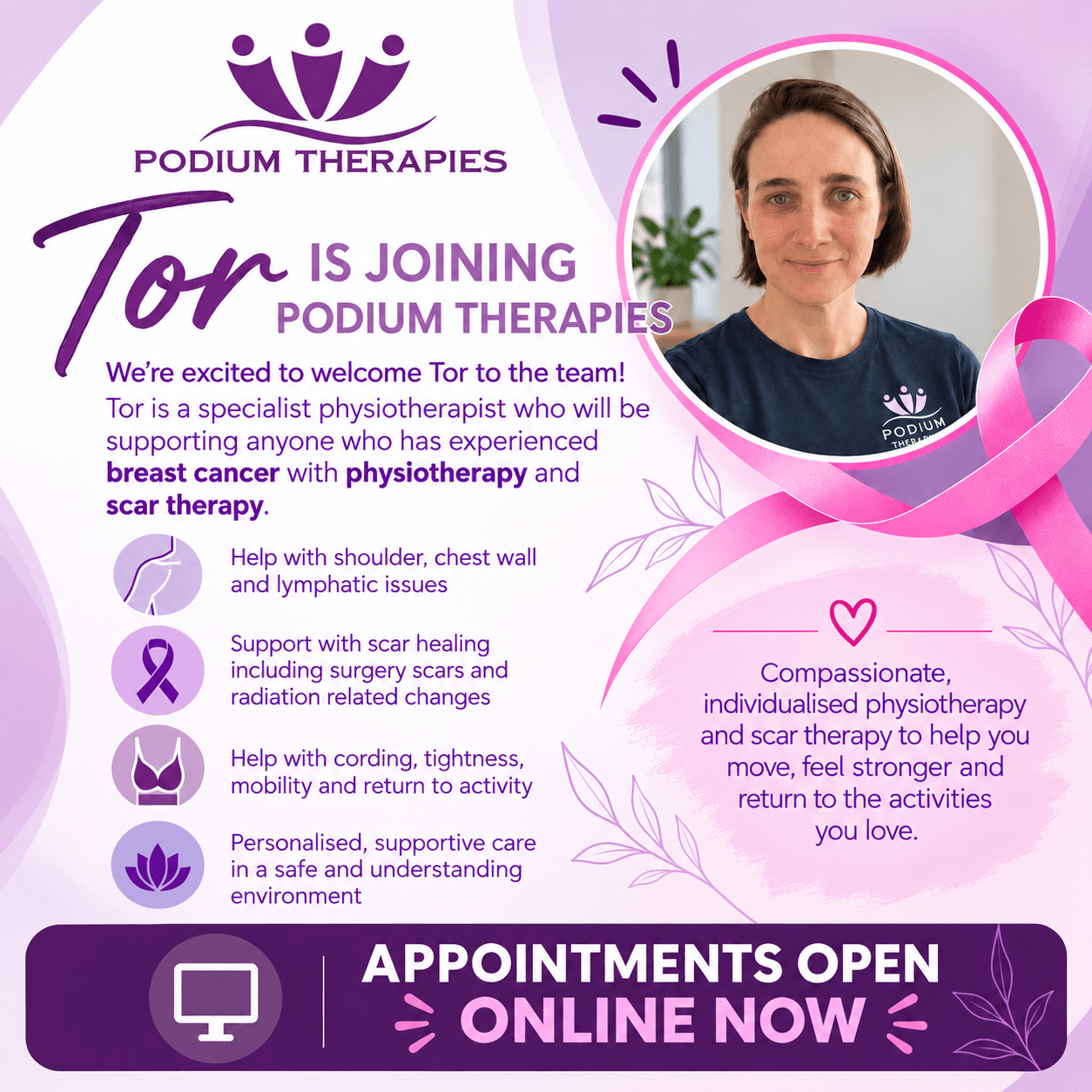
We're delighted to welcome Tor to the Podium Therapies team from mid-November! Tor will be bringing specialist breast cancer physiotherapy to our clinic in the heart of Rhiwbina, helping clients with cording, restricted mobility, stiffness and rehabilitation following breast cancer treatment. Working alongside Sheree, who specialises in scar therapy massage using the Restore Scar Therapy Method, and Kymm offering oncology reflexology, we can offer a collaborative approach to recovery, supporting clients whether their treatment was recent or many years ago.
Tuesday appointments are now available to book online!
🌐 www.podiumtherapies.co.uk